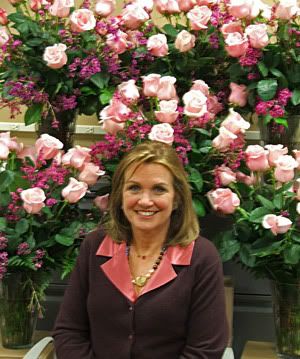
Wendy Button used to be a staffer for JRE 08 campaign. And she was a pretty good writer too.
After all of the hype about yesterday's interview on Oprah (and the media in general this week having a field day about it), Button brings us back to the ground many of us cared about: progressive values such as getting ourselves out of Iraq, homelessness, poverty, the unemployed, with this article she penned at the Huffington Post blog.
Updated: Elizabeth Edwards and the Three Headed Dragon
I did a search today on Ask.com to get information about the testimony Elizabeth Edwards was presenting to the House Committee on Energy and Commerce. One would think that is newsworthy.
Instead, this is what you see first:
It's more about Elizabeth Edwards "trust" in her marriage than about expansion of health care. She says "I don't want to feed the monster." Well, I guess there is a three-headed dragon here. Her cancer, health insurance companies, and the dirty laundry (the media). Finally two down from the list I just posted, there is a headline from the News & Observer that she is testifying at Capitol Hill.
Because I'm more interested in what she had to say about this important issue (something neither campaign is talking about much these days since the Financial crisis is overshadowing everything), I'm posting parts of her six page testimony. They are succinct and very much Elizabeth's voice:
We are in the middle of a great debate on health care in the United States. We see it in the major debates led by Massachusetts and California. We see it discussed in more than a dozen states from Maine to New Mexico. We see the health reform debate in the many bipartisan and strange bedfellow efforts that have developed. We see the debate in the reform collations that have formed, such as HCAN and Better Health Care Together. And lest we forget, the debate is happening at every kitchen table in the country, since health costs are part of our economic meltdown. Of course, some on this committee have been a part of the fight for better health care for a long time, and I’d like to thank Mr. Dingell in particular for his leadership.
But for the first time in 15 years, there promises to be a major health care debate here in Congress. Both the Republican and Democratic nominees for president have engaged in a serious health care discussion. Everyone here knows the twin problems of our broken status quo:
* 45 million uninsured. Health insurance is how we access care in the United States today. It is virtually the first question you are asked when you call a physician’s office or go to the hospital.
* Skyrocketing costs. The cost of our health care system is astronomical and constantly growing. Total health care spending in the United States doubled between 1996 and 2006, and without reform it is expected to double again in the coming decade.
Given the limited time and the impressiveness of the panel, I want to use my time to talk about the importance of health reform to:
* Address health care for all and cost-containment simultaneously. Effective cost containment requires that everyone have coverage, and covering all requires that coverage must be affordable.
* Strengthen the role of the group market. Grouping health risk in the marketplace through employer-based benefits is one of the few things we do well in the U.S. health system. Use of the individual market will undeniably weaken care delivery as more Americans become subject to pre-existing exclusions, higher cost sharing, and absent benefits.
* Use care in exploring tax credits. Reforming the tax treatment of health insurance may be an important part of health reform. However, done poorly, it could actually diminish Americans’ access to coverage. For a health insurance tax credit to work properly to expand coverage, it must make meaningful insurance coverage affordable, reflecting both family size and the rate of medical inflation. And it must not threaten employer-sponsored health insurance, which most Americans have and want to keep.
She gets to the heart of the matter here:
Much of the disagreement between the role of the individual market and the group market rests on the belief of free-market economists that buying health care is akin to buying any consumer good, like a car. Of course, individuals have a role to pay in the health care system, and we need greater transparency in pricing, quality-of-care data, and comparative effectiveness information to help them play that greater role. But the reality is that deciding between the costs and benefits of various cancer treatments like chemotherapy, radiation, and surgery will simply never be the same as choosing between purchasing a Dodge, Pontiac, and Lincoln.
We have extreme market failures in health care that require government intervention, including:
• Incentives for insurance companies to cherry-pick (or later drop those from coverage who are sick). Private insurance companies will always try to limit their losses by avoiding giving care to those who need it.
• The moral hazard faced by individuals who may choose to not get coverage for themselves or their children. Because of the cost of insurance, some individuals and their families will gamble that they can avoid getting sick to avoid paying premiums.
• Fee-for-service incentives for providers instead of incentives that reward prevention and wellness. We continue to fail to put sufficient emphasis on chronic care and disease management in our health care system.
In short, it is a dangerous mistake to overstate the role that consumerism can play in health care that will cost lives if we get it wrong.
Tomorrow, I will provide a link to the archived web cast from the House site. I can guarantee she wore lipstick when she testified. But I'll take a pit bull on the issues any day of the week over an underqualified hockey mom who's more of a shiny object for the McPalin McCain-Palin ticket.
Update: as promised, here is the entirety of the hearing online. Elizabeth's portion starts around 1:03.
Otherwise, if you want to see a part of it, here's a link to the ABC News, which has about 3/8 of her testimony.
In both instances, she rips McCain's health care plans and calls him out on them.
Happy B-day, Elizabeth Edwards. You have inspired many of us with your determination to get health care coverage for all of us and still have time for your family. You have been a vocal advocate for media reform, something needed so much in our country. The Fourth Estate is in a mess, just as our country is. Yet, unfailingly you remain optimistic.
NCDem Amy got this right with this v-card for EE (done two years ago):
She is the "everywoman".
Hope your birthday is relaxing on your day, Elizabeth--at the summer place or wherever you and John, Emma Claire, and Jack are. On behalf of BW readers, we wish you the best!
The Honorable John Edwards has been in the news again and talking about a big buzz! He was on the Today show, Morning Joe show, and on NPR's All Things Considered (h/t Andy) yesterday.
Our former presidential hopeful was out to talk about a new anti-poverty initiative, Half In Ten. But what kinds of conversations do you think transpired on those shows? Poverty issues?
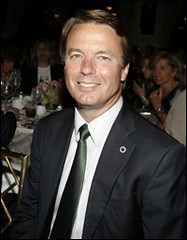
(Picture via NPR website, taken at the Mother of the Year awards which honored 4 women, Elizabeth Edwards among them, Thursday)
No BW readers, the media was not interested in the least about John Edwards' leadership on a new anti-poverty initiative, just as they frickin' weren't when he was campaigning for the nomination. They were busy with the usual crappola of ignoring issues, instead focusing on the campaigns of the two remaining Democratic candidates.
Watch this first video from the Today Show with Matt Lauer (courtesy of NCDem via YT)
It's good to see to see John, but look how long it took (on the 5:47 minute interview) to get to the real policy issue: poverty. It happened at the 4:36 mark. So, talking for poverty for less than one minute, as Lauer jumped back to trying to catch Edwards in who was more equipped to handle the issue of poverty for the last 20 seconds, well, to borrow part of a quote from the Chimpmaster, "You're doing a heck of a job, Matt."
Guess it was better than nothing, and it created buzz. Sounds like after that interview, John Edwards was a little better prepared for what was coming on Morning Joe, except they still played the gotcha game:
Granted, not all of the interview was on that YT, but again, it's more about the remaining candidates? Some folks at Brand X thought he said he voted for "him" on Tuesday, but in listening to that video, I heard "em", not him. And JRE validated this fact to USA Today's Susan Page (h/t to a personal friend in an e-mail)
What happened to the poverty initiative leadership? Almost nada.
Lastly, JRE was on NPR this afternoon. I took a few notes from it.
First, is that Michelle Norris did start off the interview about poverty and how it would be possible to cut the poverty rate in half in 10 years when JRE wanted to end it in 30. Fair question.
JRE responded that we have learned a lot from the original war on poverty, and that he stood by trying to cutting it down.
"What is required is sustained leadership and a sustained effort by the American people to address it again with the lessons that we've learned," Edwards said.
Steps such as raising the minimum wage, expanding the earned income tax credit and offering child care to low-income families would lift millions of people out of poverty, Edwards said.
Norris asked how we can alleviate poverty when we don't have a good economy, and JRE said that too much of this Administration's efforts have been making the wealthy more wealthy (so to speak) and taking away from the middle class. If we give a hand up to the working poor, using some of the ideas put forth, we can grow the middle class, which will make our economy stronger again.
But then, within a couple of minutes or less, it got back to the endorsement issue. Oh sister. JRE was astute about saying that his endorsement didn't matter, but more important, staying out of it gave him an opportunity to push all the politicians about issues that mattered to him, such as poverty.
Here's the link if you wish to listen (and comment in the comments section) to the NPR interview, plus it gives a summary.
What is not included is the story about Macklin Blair, 21 yo from Eastern KY and who met JRE. He is one of the working poor, and as much as he doesn't like to admit it, he's having trouble making ends meet, and has considered working in the mines since mining pays well for dangerous work. Yet, he knows strip mining of the mountains is bad for the environment in more ways than one, but that poor people often have to work those type of jobs, even if they make more problems.
That made me sad. Blair was talking about the issues. Why aren't the media listening to a regular citizen wanting to talk about real issues, not which candidate has more money or will be endorsed?
Lastly, you all may have heard that JRE and EE are in People magazine this week. Here's a link to the excerpt; full-blown article is on the Newstands. But again, it focuses on endorsements. I'm not clear if that's what Elizabeth and John really wanted to discuss.
Highlights from the Anti-Poverty Initiative, formed from coalitions, since the M$M (nor Brand X, MyDD, etc) won't report this great piece of potential for buzz:
The United States should set a national goal of cutting poverty in half over the next 10 years. A strategy to cut poverty in half should be guided by four principles:
* Promote Decent Work. People should work and work should pay enough to ensure that workers and their families can avoid poverty, meet basic needs, and save for the future.
* Provide Opportunity for All. Children should grow up in conditions that maximize their opportunities for success; adults should have opportunities throughout their lives to connect to work, get more education, live in a good neighborhood, and move up in the workforce.
* Ensure Economic Security. Americans should not fall into poverty when they cannot work or work is unavailable, unstable, or pays so little that they cannot make ends meet.
* Help People Build Wealth. All Americans should have the opportunity to build assets that allow them to weather periods of flux and volatility, and to have the resources that may be essential to advancement and upward mobility.
We recommend 12 key steps to cut poverty in half:
1. Raise and index the minimum wage to half the average hourly wage. At $5.15, the federal minimum wage is at its lowest level in real terms since 1956. The federal minimum wage was once 50 percent of the average wage but is now 30 percent of that wage. Congress should restore the minimum wage to 50 percent of the average wage, about $8.40 an hour in 2006. Doing so would help nearly 5 million poor workers and nearly 10 million other low-income workers.
2. Expand the Earned Income Tax Credit and Child Tax Credit. As an earnings supplement for low-income working families, the EITC raises incomes and helps families build assets. The Child Tax Credit provides a tax credit of up to $1,000 per child, but provides no help to the poorest families. We recommend tripling the EITC for childless workers and expanding help to larger working families. We recommend making the Child Tax Credit available to all low- and moderate-income families. Doing so would move as many as 5 million people out of poverty.
3. Promote unionization by enacting the Employee Free Choice Act. The Employee Free Choice Act would require employers to recognize a union after a majority of workers signs cards authorizing union representation and establish stronger penalties for violation of employee rights. The increased union representation made possible by the Act would lead to better jobs and less poverty for American workers.
4. Guarantee child care assistance to low-income families and promote early education for all. We propose that the federal and state governments guarantee child care help to families with incomes below about $40,000 a year, with expanded tax help to higher-earning families. At the same time, states should be encouraged to improve the quality of early education and broaden access for all children. Our child care expansion would raise employment among low-income parents and help nearly 3 million parents and children escape poverty.
5. Create 2 million new “opportunity” housing vouchers, and promote equitable development in and around central cities. Nearly 8 million Americans live in neighborhoods of concentrated poverty where at least 40 percent of residents are poor. Our nation should seek to end concentrated poverty and economic segregation, and promote regional equity and inner-city revitalization. We propose that over the next 10 years the federal government fund 2 million new “opportunity vouchers” designed to help people live in opportunity-rich areas. Any new affordable housing should be in communities with employment opportunities and high-quality public services, or in gentrifying communities. These housing policies should be part of a broader effort to pursue equitable development strategies in regional and local planning efforts, including efforts to improve schools, create affordable housing, assure physical security, and enhance neighborhood amenities.
6. Connect disadvantaged and disconnected youth with school and work. About 1.7 million poor youth ages 16 to 24 were out of school and out of work in 2005. We recommend that the federal government restore Youth Opportunity Grants to help the most disadvantaged communities and expand funding for effective and promising youth programs—with the goal of reaching 600,000 poor disadvantaged youth through these efforts. We propose a new Upward Pathway program to offer low-income youth opportunities to participate in service and training in fields that are in high-demand and provide needed public services.
7. Simplify and expand Pell Grants and make higher education accessible to residents of each state. Low-income youth are much less likely to attend college than their higher income peers, even among those of comparable abilities. Pell Grants play a crucial role for lower-income students. We propose to simplify the Pell grant application process, gradually raise Pell Grants to reach 70 percent of the average costs of attending a four-year public institution, and encourage institutions to do more to raise student completion rates. As the federal government does its part, states should develop strategies to make postsecondary education affordable for all residents, following promising models already underway in a number of states.
8. Help former prisoners find stable employment and reintegrate into their communities. The United States has the highest incarceration rate in the world. We urge all states to develop comprehensive reentry services aimed at reintegrating former prisoners into their communities with full-time, consistent employment.
9. Ensure equity for low-wage workers in the Unemployment Insurance system. Only about 35 percent of the unemployed, and a smaller share of unemployed low-wage workers, receive unemployment insurance benefits. We recommend that states (with federal help) reform “monetary eligibility” rules that screen out low-wage workers, broaden eligibility for part-time workers and workers who have lost employment as a result of compelling family circumstances, and allow unemployed workers to use periods of unemployment as a time to upgrade their skills and qualifications.
10. Modernize means-tested benefits programs to develop a coordinated system that helps workers and families. A well-functioning safety net should help people get into or return to work and ensure a decent level of living for those who cannot work or are temporarily between jobs. Our current system fails to do so. We recommend that governments at all levels simplify and improve benefits access for working families and improve services to individuals with disabilities. The Food Stamp Program should be strengthened to improve benefits, eligibility, and access. And the Temporary Assistance for Needy Families Program should be reformed to shift its focus from cutting caseloads to helping needy families find sustainable employment.
11. Reduce the high costs of being poor and increase access to financial services. Despite having less income, lower-income families often pay more than middle and high-income families for the same consumer products. We recommend that the federal and state governments should address the foreclosure crisis through expanded mortgage assistance programs and by new federal legislation to curb unscrupulous practices. And we propose that the federal government establish a $50 million Financial Fairness Innovation Fund to support state efforts to broaden access to mainstream goods and financial services in predominantly low-income communities.
12. Expand and simplify the Saver’s Credit to encourage saving for education, homeownership, and retirement. For many families, saving for purposes such as education, a home, or a small business is key to making economic progress. We propose that the federal “Saver’s Credit” be reformed to make it fully refundable. This Credit should also be broadened to apply to other appropriate savings vehicles intended to foster asset accumulation, with consideration given to including individual development accounts, children’s saving accounts, and college savings plans.
Our recommendations would cut poverty in half. The Urban Institute, which modeled the implementation of one set of our recommendations, estimates that four of our steps would reduce poverty by 26 percent, bringing us more than halfway toward our goal. Among their findings:
* Taken together, our minimum wage, EITC, child credit, and child care recommendations would reduce poverty by 26 percent. This would mean 9.4 million fewer people in poverty and a national poverty rate of 9.1 percent—the lowest in recorded U.S. history.
* The racial poverty gap would be narrowed: White poverty would fall from 8.7 percent to 7 percent. Poverty among African Americans would fall from 21.4 percent to 15.6 percent. Hispanic poverty would fall from 21.4 percent to 12.9 percent and poverty for all others would fall from 12.7 percent to 10.3 percent.
* Child poverty and extreme poverty would both fall: Child poverty would drop by 41 percent. The number of people in extreme poverty would fall by 2.4 million.
* Millions of low- and moderate-income families would benefit. Almost half of the benefits of our proposal would help low- and moderate-income families.
That these recommendations would reduce poverty by more than one quarter is powerful evidence that a 50 percent reduction can be reached within a decade.
The combined cost of our principal recommendations is in the range of $90 billion a year—a significant cost but one that could be readily funded through a fairer tax system. An additional $90 billion in annual spending would represent about 0.8 percent of the nation’s gross domestic product, which is a fraction of the money spent on tax changes that benefited primarily the wealthy in recent years. Consider that:
* The current annual costs of the tax cuts enacted by Congress in 2001 and 2003 are in the range of $400 billion a year.
* In 2008 alone the value of the tax cuts to households with incomes exceeding $200,000 a year is projected to be $100 billion.
Our recommendations could be fully paid for simply by bringing better balance to the federal tax system and recouping part of what has been lost by the excessive tax cuts of recent years. We recognize that serious action has serious costs, but the challenge before the nation is not that we cannot afford to act; rather, it is that we must decide to act.
The Next Steps
In 2009, we will have a new president and a new Congress. Across the nation, there is a yearning for a shared national commitment to build a better, fairer, more prosperous country, with opportunity for all. In communities across the nation, policymakers, business people, people of faith, and concerned citizens are coming together. Our commitment to the common good compels us to move forward.
But back to my rant...and why I blog here most of the time or at the EENR blog is...
I agree with John as I don't care about his and Elizabeth's endorsements. While Brand X'ers have been trashing both of them for not endorsing and with the interviews of late, Brand X'ers know they do matter. But I'm with John and Elizabeth: let the process play out.
And let's get to work on pushing more for better health care access and cutting poverty in half in the next decade. Go here to read more about Half in Ten.
More buzz l8tr..., especially about the issues...since the Media creates poverty for issues.
Elizabeth went bowling on the NYT and scored a perfect frame.
Bowling 1, Health Care 0
FOR the last month, news media attention was focused on Pennsylvania and its Democratic primary. Given the gargantuan effort, what did we learn?
Well, the rancor of the campaign was covered. The amount of money spent was covered. But in Pennsylvania, as in the rest of the country this political season, the information about the candidates’ priorities, policies and principles — information that voters will need to choose the next president — too often did not make the cut. After having spent more than a year on the campaign trail with my husband, John Edwards, I’m not surprised.
Why? Here’s my guess: The vigorous press that was deemed an essential part of democracy at our country’s inception is now consigned to smaller venues, to the Internet and, in the mainstream media, to occasional articles. I am not suggesting that every journalist for a mainstream media outlet is neglecting his or her duties to the public. And I know that serious newspapers and magazines run analytical articles, and public television broadcasts longer, more probing segments.
The Citizen, the newsletter of the KSG, interviewed Elizabeth during her visit. They are now just getting around to publishing it. She was asked about her influence as a spouse with voters on the campaign trail, media reform, and being a parent on the campaign trail.
Q: You’ve now done a presidential campaign twice. Has the role of a candidate’s spouse has changed?
The people who broke the mold on campaigning [as the spouse of a presidential candidate] are people that nobody ever thinks about: Betty Ford and Roslyn Carter. Roslyn Carter would go out and sit in the kitchens of people in Iowa and talk about the price of fertilizer. We didn’t have CSPAN or other things that followed her around and got to see that this was what she was doing, but she did a lot of that-campaigning without [her husband]. Betty Ford doing the same thing, campaigning and being out there and speaking her own mind.
I think spouses are nearly irrelevant. I don’t want to say totally irrelevant.
But can you really make a positive difference? Probably not.
Then EE pauses with this question:
And should you make a difference at all? I think no. I think you’re role is so minimal, largely ceremonial. You can take on issues, but the likelihood of a presidential first spouse taking on a truly controversial issue-reading, literacy, childhood vaccination, beautifying our highways-this is the stuff of first ladies. We’re not talking about anything that’s truly groundbreaking. So what difference does it make?
I had a slightly different bent. I was interested in military families, having come from one. But that’s not controversial. So why in the world should I matter? Or Michelle [Obama] or Cindy [McCain]? We should not matter. We’re picking the leader of the free world and yet there’s this fascination [with the candidate’s spouses]. It’s this celebrity culture. … I expect a tremendous fixation on it. When we’re making this choice I think is really counter-productive.
Q: In your Forum address, you were pretty critical of the media for putting entertainment ahead of substance. Do you think that part of the problem with the media is more of a demand problem? The analogy that comes to mind is, everyone wants a Big Mac even though they know it’s bad for them. And we have a public that wants to find out the latest on Britney Spears. So how do you disentangle what people want from what they should want?
A: I think a lot reasons people eat a Big Mac as opposed to a salad is because they can drive through and get the Big Mac and eat it while they drive. And they can’t eat the salad. If somebody put a salad out in front of them, people might eat that instead. But we make it very easy to eat the Big Mac, very hard to eat the salad. And therefore people make the choices that they do.
We make it very hard to get really good information about candidates or about issues, certainly on investigative things, and very easy to hear about what’s happening with Britney Spears or Lindsay Lohan or-and this is the most incredible to me-Anna Nicole Smith is sort of a freakish kind of character. Not a major star in any way. Yet we spend how many hours of certainly the cable news time and also on the national news on who is the father of Anna Nicole Smith’s baby? A completely useless piece of information about a completely minor character on the waterfront. Is that because that’s what we asked for? I’ve heard the press say it in embarrassed tones, “We wouldn’t be doing this kind of coverage if that’s not what people wanted,” but I’m flipping channels and I got nothing but Anna Nicole Smith!
Amen, Elizabeth. The next question was about ratings, so what should the media do? Elizabeth couched her answer more in terms of real journalism:
I want journalists nationwide to stand up and say, “That’s it. We’re going to be serious journalists. … We are not going to do this stuff anymore. You can hire some jacklight person.” And for the rest of us to say, “As long as Charmin is advertising the Anna Nicole Smith trial, I’m not buying Charmin.”… But I do think we need to at some point say “This is too important an issue.” We’re not going to get the general public to do it. So it’s probably going to require journalists to say, “I cannot, will not, be a part of this.” … I do think that there are some efforts to change the landscape. But there are still too many people who get their news from the network news. And the network news is just sorry. … I actually quit watching the national network news. Unless I know my husband is going to be on the national network news, I don’t watch it. I find it boring. I’ll watch [the NewsHour with Jim] Lehrer and I’ll watch BBC.
I know what she means. I hardly ever watch Network News, or Cable News. I get mine mainly from C-SPAN.
ABC News: Debates You Cannot Count On for Election Coverage
Short post because Tom Shales at WaPO wrote most of how I felt about the ABC News Debate last night. I don't know if camera work or questions were slanted to help Clinton, but Charlie and George should have known better than to spend the first hour on gossip.
Aldon Hynes wrote an estute complaint to ABC News:
I hope you are truly ashamed for having produced the worst Presidential debate on television. Some of us want to hear the possible next leaders of the free world talk about real issues.
What you did was a grave disservice to our country.
Like Aldon, I also complained at ABC News' website here.
Our media needs serious reform. And news journalism is should not be entertainment.
Jayne Lyn Stahl: Edwards: Too Soon for Political Obituary
"So, maybe the media has timed out on John Edwards. Maybe the pay for view press has decided to shrink the contest for the Democratic presidential nomination to two candidates, but this would be premature evacuation."
This opening paragraph came from HuffPo. It is a clear argument about how the media should not decide our elections and why Edwards is still very much in this race. He is the only one at this point that will get all of our combat forces out of Iraq or redeployed. Thus, Stahl adds the hint of lessons not learned from the Vietnam era to her argument about the media:
If we, in this country, weren't so insistent upon novelty, and looked instead to competency, John Edwards would be, by far, the clear leader as the nominee of the Democratic Party. Yet, in keeping with their time-honored tradition, the Democrats will instead show their uncanny ability to foul it up all just when a victory is most needed, and instead of delivering an end to a war which has lasted longer than Vietnam, we will, yet again, deliver a nominee who is guaranteed to pull an LBJ and keep fanning the flames of war in the name of bringing the boys home. The lies are the same; the only thing that's changed is the calendar.The danger of not having real change.
It's different from the other candidates, tad corny (but then Iowa grows a lot of corn), but I think it's brilliant at the same time. It's rated CG: Caucus Goers.
Take a look:
The voice-over is by JRE supporter George Hoyo, who is well known for his voice overs in trailers. And I think Kevin Bacon is helping out with the e-mails (and possible snail mailings) to Iowans. You can read more about it at the Caucus Command Center at JRE's site.
I missed JRE on the Today show this morning, but apparently he was on his game, according to Chuck Todd, who thought a few weeks ago Edwards wasn't worth mentioning since he wasn't a viable candidate.
And if you haven't seen Newsweek this week, check it out. JRE is on the cover.
Today Bonnie Raitt and Jackson Browne will be back with the JRE to help campaign in NH. Wish I could go.
America rising indeed--and so is Edwards' campaign. The media just woke up.
Josh Marshall from TPM TV does a great trip down memory lane with Trent Lott, and it was the first time that a blogger caught a misstep on a major politican that led to the beginning of his demise.
The event I remember clearly as I saw it on C-SPAN that evening. My DH and I shook our heads in disbelief. But the MSM didn't say a word about it. It took a blogger like Marshall to point it out and get the attention of the MSM.
In case you hadn't heard, Lott is resigning his position to work on the more lucrative K street before the new law that increases the embargo time between when someone elected to Congress can turn around and become a lobbyist.
Please watch the video. Later this evening, I will be adding more thoughts (longer response), something I haven't done in some time, about why this video resonates with me.
Oliver Willis and Taylor Marsh have definite opinions too, in which both take an angle that Edwards blasts the Democrats too much, and perhaps Edwards is not going to get out of third place in the national polls with such a speech. One of them believes Edwards borrowed a play out of the wingnut playbook. I don't think so as I've been following Edwards for quite some time, but each good blogger is entitled to her/his opinion.
Do feel free to add to the discussion. Will write more l8tr, but in general, this is about We the People.
Note: while I am on vacation, I thought I would pull a post I saw on Digg. This commentary is by Jeff Feldman, who is the blogger of Frameshop. It is very worthy of reading. Also, Taylor Marsh has a good one too.
Seemingly without any sense of self control or sense of modern perspective, more and more journalists seem to be picking up sharp objects to poke the Edwards family--writing articles not worthy of this century, let alone this country...
Today I look at Yahoo news and this is what they had to say about the weather in the Northeast.
They report that a storm out that roared out of the Midwest turned into a blizzard for NY and NE.
Yet, buried within the story is how Springfield, IL got 16 inches of snow.
All I know is that the University of Illinois cancelled classes after 9 am yesterday and all today due to severe winds that lasted for 28 hours. The drifts are 4 or more feet near my front porch, as BW readers can see here.
If that isn't a nor'easter for Illinois, I guess AP thinks midwesterners all have lollipops on Valentine's Day too.
To me, the storm and the AP's report are metaphors for what happened to Amanda Marcotte and Melissa McEwan, formerly of the Edwards campaign. Update: article written by Marcotte in Salon magazine, giving her side of the right wing misogyny that took place, and continues on.
This blog is for my friends and acquaintances who were formerly with the John Edwards campaign, which had the most progressive agenda. I am a progressive liberal, musing about politics and life.


 The Honorable John Edwards has been in the news again and talking about a big buzz! He was on the